
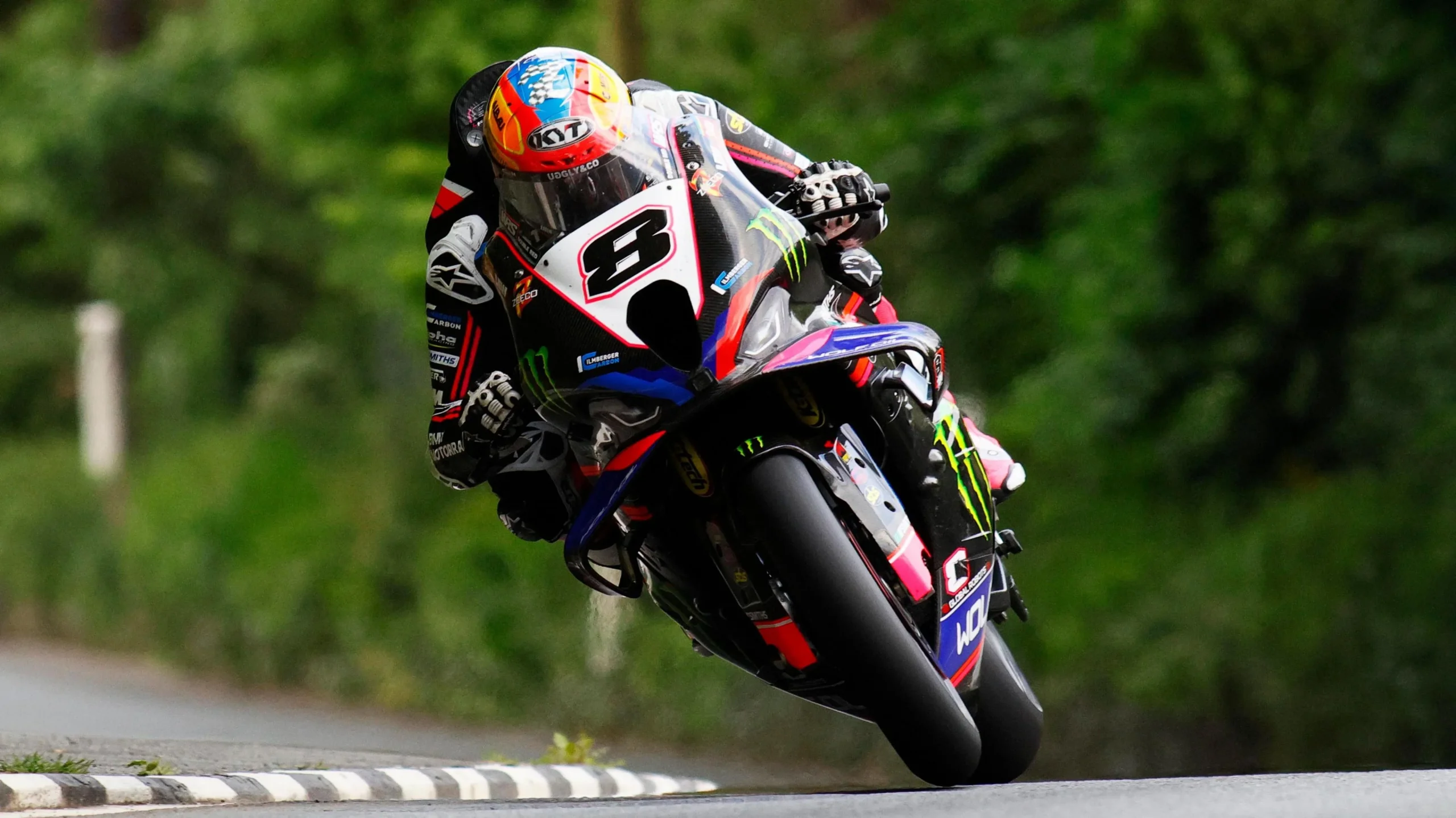
How do motorcycle road racers mentally cope with the ever-present danger of death in their sport?
The North West 200 road race has been deeply affected by the tragic passing of Czech rider Kamil Holan. The 48-year-old succumbed to injuries sustained in a crash at the high-speed Station Corner during the Superbike qualifying session, the first on-track activity on Thursday. This incident marks the 20th rider fatality in the event’s 97-year history, and the first since Malachi Mitchell-Thomas in 2016.
Later that evening, with the consent of Holan’s family, racing resumed for the final qualifying sessions, and the planned six races on Saturday will proceed as scheduled. Davey Todd, a prominent road racer absent this year due to injuries from a March crash in Daytona, acknowledges how outsiders struggle to understand how riders return to the track so soon after such a tragedy.
“I do understand it. Unfortunately, to understand it, you have to be a part of it,” Todd told reporters. “As soon as you are a part of this amazing sport, you understand how it works and why we continue to do what we do. Honestly, that’s the only way, as much as you try to explain to people exactly why we’re going to continue to race on Saturday after such a tragic thing.”
Motorcycle road races take place on closed public roads, with the Triangle Circuit at the North West 200 spanning 8.97 miles between Portstewart, Coleraine, and Portrush on Northern Ireland’s north coast. Station Corner, where Holan lost his life, is one of the fastest sections on the circuit. Todd, a nine-time winner at the North West 200, has faced competing after fatal accidents multiple times at the Isle of Man TT, where 10 riders have died since his 2018 debut.
The 30-year-old says such tragedies are “something we all think about and spare a minute for remembering the fallen riders.” He added, “At the same time, as soon as that visor goes down, you actually can’t think about anything else. For me in particular, it gives you a little bit of a break because all you can think about is the road in front of you. You can’t actually think about the ‘what ifs’ and the doubts. It helps you continue, but as soon as the helmet comes back off, then the memories come back.”
Todd describes being on the circuit as his “happy place” and says “for most of us it is all we know.” He explains, “When the visor comes down, it is more relaxing and the doubts, fears, and everything else in your life actually go away, and it’s just you.”
The English rider, who will be part of BBC Sport NI’s coverage on Saturday, notes that while it is “really tough” when a rider passes away, the road racing “community really comes together.” He adds, “Everybody stands together, and it’s not the nice side of racing, but it is a part of it nonetheless. Everybody supports each other and tries to be there for each other in times of need. At the end of the day, as the family did on this occasion, all of us would want the racing to continue nonetheless. We love it, we love the sport. We love almost everything about it and try to continue and remember this rider for as long as possible.”
‘The highs are high, but the lows are low’
Road racing remains a dangerous sport, with riders reaching speeds over 200 mph on the long run to University Corner at the North.